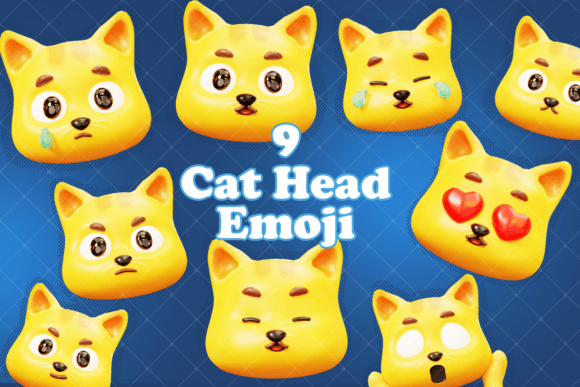
3D Cat Head Character Emoji, Expression
In the evolving landscape of digital design and creative assets, 3D Cat Head Character Emoji, Expression has emerged as a versatile category of visual elements. These assets represent a specific style of graphic illustration that combines three-dimensional rendering techniques with the familiar format of emoji icons. Unlike flat vector graphics or traditional 2D cartoons, this style utilizes depth, lighting, and shadow to create characters that appear tactile and lifelike while retaining the simplified geometry of emoticons.
For designers, crafters, and content creators, understanding the specific attributes of these assets is crucial before integrating them into projects. The following analysis explores the characteristics, applications, and practical considerations associated with high-quality 3D cat head character bundles.
Understanding the Asset Format
The core definition of 3D Cat Head Character Emoji, Expression involves a set of isolated graphical files, typically provided in PNG format with transparent backgrounds. This transparency is a critical technical feature, allowing the images to be layered over any background color or texture without unsightly white borders. In a typical commercial bundle, such as the one containing nine distinct variations, each file is rendered at a high resolution, often 3000 x 3000 pixels.
This resolution ensures that the asset maintains clarity when scaled up for large-format printing or scaled down for mobile interface use. The "3D" aspect refers to the rendering engine's ability to simulate volume. A flat circle becomes a sphere; simple lines gain gradients to suggest curvature. This adds a layer of sophistication that can elevate the perceived value of a design project, making it suitable for modern web aesthetics and contemporary merchandise.
Primary Applications and Use Cases
The versatility of these assets stems from their neutral yet expressive nature. Because they are stylized representations of animals rather than complex illustrations, they function well across diverse mediums. The primary utility lies in their ability to convey emotion quickly and effectively.
- Digital Design: Web designers frequently utilize these icons for user interfaces, loading screens, or social media engagement buttons. Their rounded, friendly appearance aligns well with current UI trends that prioritize approachability.
- Print Merchandise: The high-resolution quality makes them ideal for print-on-demand products. They render clearly on t-shirts, tote bags, mugs, and phone cases. The lack of watermarks in purchased files is essential here, ensuring the final product looks professional.
- Craft and Stationery: For hobbyists, these images serve as templates for paper crafts, scrapbooking, and greeting cards. The transparent background allows for easy integration into digital layout software before cutting or printing physical materials.
- Embroidery and Decor: While not vector files, the high pixel count allows users to trace or digitize the shapes for embroidery machines or wall art decals.
Evaluating Benefits and Tradeoffs
When considering whether to incorporate 3D Cat Head Character Emoji, Expression into a workflow, it is necessary to weigh the advantages against potential limitations.
Key Benefits
The most significant advantage is the commercial license included with many of these bundles. This permits the user to sell physical products featuring the design without paying additional royalties per item sold. Furthermore, the high-resolution specification (3000 x 3000 px) eliminates the common issue of pixelation that plagues lower-quality internet graphics. The inclusion of multiple expressions within a single package offers variety, reducing the need to source individual assets from different providers.
Considerations and Limitations
However, there are specific constraints that users must accept. First, these are raster images, not vector files. This means they do not scale infinitely without loss of quality. If a designer needs to resize an image significantly beyond its original dimensions, blurriness may occur. Second, the absence of SVG files is a notable tradeoff. Vector formats are preferred for cutters like Cricut or Silhouette because they allow for precise cutting paths. Without SVG files, users must manually trace the outlines if they intend to use a cutting machine, which adds time and requires additional skill.
Additionally, color accuracy is a variable factor. Since colors may vary across different devices and printers, a vibrant orange cat on a screen might print slightly differently on a specific brand of inkjet printer. Users should always perform a test print to verify color fidelity before committing to a large production run.
Situational Fit: When to Choose This Style
This asset type is a strong fit for projects requiring a balance between modern aesthetics and emotional connection. It is particularly effective for brands targeting younger demographics or those focusing on lifestyle, pet care, and playful themes. The 3D style conveys a sense of polish and professionalism that flat 2D clip art sometimes lacks.
If the goal is to create a cohesive look for a line of greeting cards or a seasonal marketing campaign, having a pre-packaged set of nine matching expressions ensures visual consistency. The uniformity in lighting and style across the bundle helps maintain a professional brand identity.
Alternatives and Decision Making
While 3D Cat Head Character Emoji, Expression bundles offer excellent value for raster-based projects, they are not the only option available. Designers should consider alternatives based on their specific technical requirements.
Vector Illustrations
If the primary need involves scaling images to massive sizes (such as billboards) or creating intricate cut files for vinyl cutting, purchasing vector files (AI, EPS, or SVG) is a superior choice. Vectors allow for infinite resizing and easy manipulation of individual path segments. However, high-quality 3D vector renders are often more expensive and harder to find than standard raster bundles.
Flat 2D Graphics
For projects where file size is a concern, such as email newsletters or fast-loading websites, flat 2D graphics are more efficient. They require less bandwidth and load faster than high-resolution 3D PNGs. If the design aesthetic leans towards minimalism or retro styles, 3D elements might feel out of place compared to flat iconography.
Practical Implementation Tips
To maximize the utility of these assets, users should adopt a strategic approach to file management. Since the files are compressed in ZIP folders, it is advisable to extract them immediately upon download and organize them by expression type. Before using the images in a final project, check the color profile. Converting the images to CMYK mode is recommended for professional printing, whereas RGB is standard for digital displays.
For crafters using cutting machines, the process will involve importing the PNG into design software, tracing the outline to create a vector path, and then saving that path as a cut file. This extra step is necessary due to the lack of native SVG support in the bundle.
Conclusion
The decision to use 3D Cat Head Character Emoji, Expression depends largely on the intended output medium and the technical resources available. For digital designers, print-on-demand sellers, and craft enthusiasts who prioritize high visual quality and emotional resonance, these assets provide a robust foundation. The combination of high resolution, transparent backgrounds, and commercial licensing makes them a practical investment for a wide range of creative endeavors.
However, users must remain aware of the limitations regarding scalability and cutting capabilities. By acknowledging that these are raster images and planning accordingly—perhaps by combining them with vector tools for cutting projects—creators can leverage the strengths of this style while mitigating its weaknesses. Ultimately, the choice aligns best with goals that demand a polished, modern, and expressive visual language.