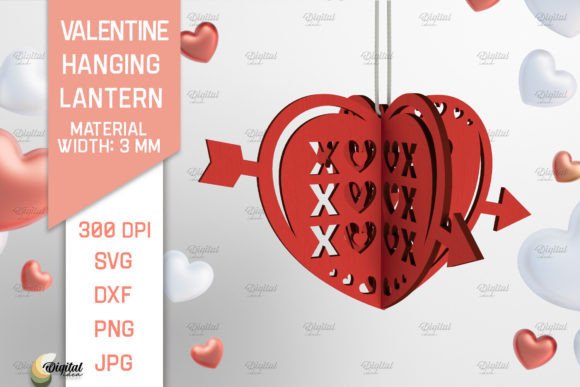
3D Valentine Hanging Lantern Laser Cut: A Digital Design Evaluation
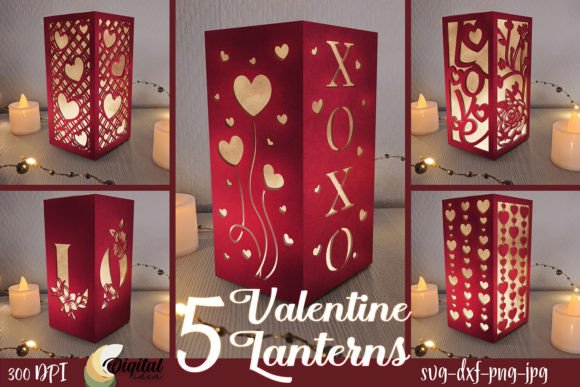
The market for digital crafting assets has expanded significantly, offering creators access to complex designs without the need for expensive physical machinery or materials. Among these resources, the 3D Valentine Hanging Lantern Laser Cut file stands out as a versatile option for those looking to create dimensional decor. It is crucial to understand at the outset that this is a DIGITAL product. No physical item will be shipped; instead, the purchase provides a zip folder containing the raw design data necessary for fabrication. This distinction fundamentally changes how a buyer approaches the acquisition, shifting the focus from immediate gratification to the potential of creation.
This evaluation explores the utility, technical requirements, and practical applications of the 3D Valentine Hanging Lantern Laser Cut design. By analyzing the format, compatibility, and creative possibilities, readers can determine if this specific asset aligns with their workflow and project goals.
Understanding the Product Format
The core value of this offering lies in its comprehensive file suite. Upon purchase, the user receives a collection of formats including SVG, DXF, EPS, PDF, JPG, and PNG. Each format serves a distinct purpose within the digital-to-physical pipeline:
- SVG and DXF: These are vector-based formats essential for laser cutting machines (such as Glowforge, xTool, or Epilog) and vinyl cutters. They define the precise paths the machine must follow to cut or engrave material.
- EPS: Often used in professional graphic design software like Adobe Illustrator, allowing for further modification of the design before production.
- PDF, JPG, and PNG: These raster or document formats are useful for printing templates on standard paper, creating mockups, or visualizing the final assembly without specialized cutting software.
The inclusion of multiple formats ensures that the design is accessible to a wide range of users, from hobbyists using desktop plotters to professionals operating industrial laser systems. The "3D" aspect of the title indicates that the design is not a single flat shape but a set of interlocking pieces intended to be assembled into a volumetric object. This requires a level of precision during the cutting and assembly process that differs from simple flat-cut projects.
Reasons for Interest and Creative Applications
Why would a creator select a 3D Valentine Hanging Lantern Laser Cut file over pre-made decorations? The primary driver is customization. Pre-manufactured lanterns come in fixed sizes, colors, and materials. A digital file allows the maker to choose the substrate—whether it be birch wood, acrylic, cardstock, or leather—to match a specific aesthetic. Furthermore, the scale is entirely up to the user. A small version might serve as a table centerpiece, while a larger iteration could function as a room-filling installation.
The versatility of the design extends beyond home decor. The geometric nature of the lantern makes it suitable for various industries:
- Stationery and Paper Crafts: The design can be scaled down to create intricate pop-up cards or elaborate invitations.
- Textiles and Apparel: While the 3D structure is less applicable to fabric, the pattern can be printed onto textiles or used to cut stencils for screen printing on fashionable clothes.
- Tableware and Packaging: The file can be adapted to create custom gift boxes or decorative elements for event table settings.
- Prints: The clean lines of the laser-cut design translate well to high-resolution prints for wall art or posters.
The phrase "creation options are endless" reflects the modularity of the file. Users can alter the color scheme, layering order, or lighting source (LED candles vs. string lights) to produce unique variations of the base design.
Benefits and Tradeoffs
Adopting a digital file approach offers significant advantages, primarily cost-efficiency and flexibility. There is no inventory risk, as the files can be used an unlimited number of times. Additionally, the ability to iterate quickly allows for rapid prototyping. If a user dislikes a specific dimension, they can adjust the vector in their editing software and re-cut immediately.
However, there are tradeoffs that must be considered. The most significant barrier is the requirement for equipment. To realize the full potential of the 3D Valentine Hanging Lantern Laser Cut, one typically needs access to a laser cutter, CNC router, or high-quality electronic cutting machine. Without this hardware, the user is limited to printing the PDF/JPG versions, which may require manual assembly that is difficult to execute perfectly by hand.
Another consideration is the learning curve. Assembling a 3D object from laser-cut parts often involves delicate alignment and structural integrity checks. Unlike a solid plastic toy, a paper or thin-wood lantern relies on friction fits or glue joints that can fail if the tolerances are off. The user must be prepared for a trial-and-error phase during the first build.
Situations Where This Design is a Strong Fit
This digital asset is ideal for makers who already possess the necessary tools or have access to a local fab lab. It is particularly well-suited for:
- Small Business Owners: Those producing handmade goods for platforms like Etsy can use the file to generate consistent, high-quality products without upfront tooling costs.
- Hobbyists Seeking Challenge: Individuals who enjoy the process of engineering and assembling 3D models will find the structural logic of the lantern engaging.
- Event Planners: For weddings or Valentine's Day events requiring custom, themed decor, this file allows for bulk production of matching items that fit specific venue dimensions.
If the goal is to create a tangible, illuminated decoration with a professional finish, and the user has the means to cut the material accurately, this file provides a robust foundation for the project.
When Alternatives May Be Worth Considering
Conversely, there are scenarios where purchasing this file may not be the optimal decision. If a user lacks access to a laser cutter and does not intend to acquire one, the file becomes less valuable unless they plan to print and manually assemble it, which yields a lower-quality result. In such cases, buying a pre-assembled physical lantern or a simpler 2D printable template might be more practical.
Additionally, users seeking a "plug-and-play" experience without any post-processing should look elsewhere. If the expectation is to receive a finished product that requires zero assembly or finishing (like sanding edges or applying adhesive), a physical product is the only viable option. Similarly, if the design needs to be heavily modified to fit a non-standard material thickness, the provided SVG/DXF files may require significant time investment to re-engineer.
Practical Decision-Making Insights
To determine if the 3D Valentine Hanging Lantern Laser Cut aligns with your needs, consider the following checklist:
- Do you have the hardware? Assess whether you own or can rent a cutting device capable of handling the intended material thickness.
- What is your skill level? Are you comfortable interpreting vector files and assembling 3D structures?
- What is the end use? Is this for a commercial product line, a personal gift, or a one-time event display?
- Are you prepared for the variables? Different materials behave differently under a laser. Wood may char; acrylic may melt. Testing samples is a recommended step before committing to a large run.
For those who answer yes to these points, the digital file represents a high-value resource. It transforms a static concept into a customizable reality. The variety of file formats included ensures that the transition from digital design to physical object is streamlined.
In conclusion, the 3D Valentine Hanging Lantern Laser Cut is a functional tool for the modern maker. It bridges the gap between digital creativity and physical craftsmanship. While it demands a certain level of technical engagement and equipment access, the payoff is a highly personalized, durable, and aesthetically pleasing result. Whether used for home decor, stationery, or textile applications, the design offers a flexible starting point for a wide array of projects. Buyers should proceed with the understanding that the file is a blueprint for creation, not the finished artifact itself. By evaluating their resources and goals against the requirements outlined above, users can make an informed decision that maximizes the utility of this digital asset.