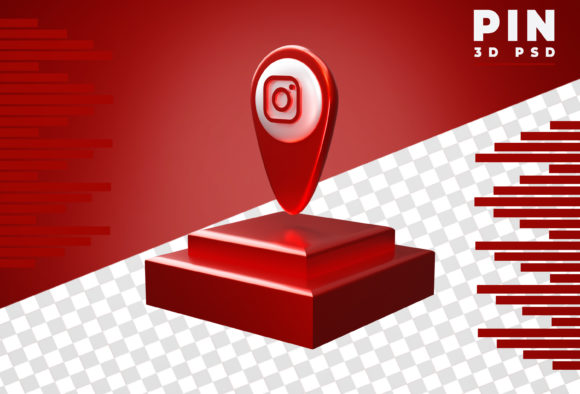
3d Pin Logo Instagram Rendering: Elevate Your Visual Storytelling
In the crowded landscape of social media, static images often struggle to capture attention. This is where a 3d Pin Logo Instagram Rendering becomes an essential tool for creators and business owners who want to stand out. Unlike flat graphics, this mockup places your artwork inside a realistic frame with a pin detail, simulating how your design looks in a genuine interior setting. Whether you are showcasing canvas prints, digital art, or personal photos, this technique bridges the gap between a simple file on a screen and a tangible piece of decor in someone's home.
The primary appeal lies in its ability to provide context. When potential clients see your logo or artwork pinned to a wall, they can instantly visualize the scale, texture, and aesthetic fit. This visualization builds trust and increases the likelihood of engagement or sales. However, simply downloading a file and dropping in an image does not guarantee a professional result. Many users overlook the technical nuances that separate a convincing render from a cheap-looking fake.
Common Pitfalls in Using Mockup Files
While the concept of using a mockup seems straightforward, there are several common mistakes that can undermine the quality of your presentation. Understanding these pitfalls is crucial for anyone looking to use a 3d Pin Logo Instagram Rendering effectively.
- Ignoring Aspect Ratios: One of the most frequent errors occurs when users force an image into the smart object layer without considering the original aspect ratio. If your artwork is square but the frame expects a portrait orientation, the image will stretch or distort, breaking the realism immediately. The beauty of a high-quality PSD file is that it should automatically adjust to your image's shape, but this only works if the source image is clean and properly sized before insertion.
- Neglecting Lighting and Shadows: A realistic rendering relies heavily on how light interacts with the surface. Users often import bright, flat images that clash with the shadowed environment of the mockup. If your logo has no contrast against the background or ignores the direction of the simulated light source, the 3D effect disappears, making the design look like it was slapped onto the photo rather than integrated into it.
- Using Low-Resolution Assets: It is tempting to grab a small thumbnail image from a website to test the mockup. While this works for a quick preview, publishing a low-resolution version of your artwork within a high-definition mockup creates pixelation. When viewers zoom in on your Instagram post or blog, the blurriness destroys the perception of quality.
- Misunderstanding Smart Objects: Beginners sometimes double-click the layer to edit, make changes, and forget to save the internal document. In many cases, they close the window without saving, causing the main file to revert to the default state. Others assume they need to manually resize the content; however, the smart-object layer is designed to handle scaling automatically. Manually resizing can introduce artifacts and degrade the final output.
The Impact of Poor Execution
These mistakes do more than just look bad; they actively harm your brand's credibility. If a customer sees a distorted image or a pixelated logo, they may question the quality of the actual product you are selling. In the world of online commerce, visual fidelity is often equated with product reliability. A poorly rendered mockup suggests a lack of attention to detail, which can lead to lost sales and reduced engagement rates.
Furthermore, inconsistent lighting or incorrect ratios can confuse your audience. If the perspective feels off, the brain rejects the image as unrealistic. This disconnect prevents the viewer from emotionally connecting with the product. For marketers and bloggers, this means lower click-through rates and diminished shareability. The goal of a 3d Pin Logo Instagram Rendering is to make the viewer feel like they are seeing the art in their own living room, not staring at a digital collage.
Best Practices for Professional Results
To avoid these issues and maximize the impact of your designs, follow a structured approach when working with the Photoshop PSD file. The process is designed to be user-friendly, but success depends on preparation.
Start with High-Quality Source Images
Before opening the mockup file, ensure your artwork is saved in a high resolution. Ideally, your image should match or exceed the dimensions of the frame area within the mockup. This ensures that when the software automatically adjusts the size and ratio, the pixels remain sharp. Avoid compressing your image too early in the workflow.
Master the Smart Object Workflow
The core feature of this template is the smart-object layer. To use it correctly:
- Open the JPEG layered Photoshop PSD file in Adobe Photoshop.
- Locate the smart-object layer in the Layers panel. It usually has a specific icon indicating its function.
- Double-click the thumbnail of this layer. This action opens a new window containing your editable canvas.
- Paste your artwork here. Do not worry about resizing; the system is built to adapt.
- Save the file (Ctrl+S or Cmd+S) and close the new window. The main window will instantly update with your new design, perfectly aligned with the frame's geometry.
This method guarantees that the frame canvas automatically adjusts to the size and ratio of your artwork image, maintaining the integrity of the 3D perspective.
Check Color Consistency
Once your image is placed, step back and evaluate the color balance. Does the white balance of your logo match the ambient lighting of the room? If your artwork is cool-toned but the room is warm, the image might look slightly "off." Minor adjustments in Photoshop's brightness and contrast settings can help blend the artwork seamlessly into the scene.
Evaluating Before You Publish
Before you finalize your decision to use a specific mockup for your online shop or social media, take a moment to inspect the file properties. Ensure the PSD file includes smart-object layers that work with all image sizes, as mentioned in the product description. Test the file with different types of images—square, portrait, and landscape—to verify that the automatic adjustment works flawlessly across various formats.
If you are purchasing or downloading a freebie, read the terms carefully. Some files may have limited layers or locked elements that restrict your ability to change the background or the pin style. A truly versatile 3d Pin Logo Instagram Rendering should allow you to customize the environment to suit your brand identity.
By avoiding common technical errors and adhering to a disciplined workflow, you transform a simple graphic into a powerful marketing asset. This approach not only saves time but also ensures that your 3d Pin Logo Instagram Rendering delivers the professional look necessary to impress clients and grow your audience. Whether you are a freelancer presenting a portfolio or a small business owner launching a new print line, the right mockup strategy makes all the difference.
Remember, the goal is authenticity. When done right, your customers won't just see a picture; they will see themselves hanging your art on their walls. That emotional connection is what drives success in the digital marketplace.